Keep Calm and Aim for the Head: Biofeedback-Controlled Dynamic Difficulty Adjustment in a Horror Game
JournalIEEE Transactions on Games, 2022
In short
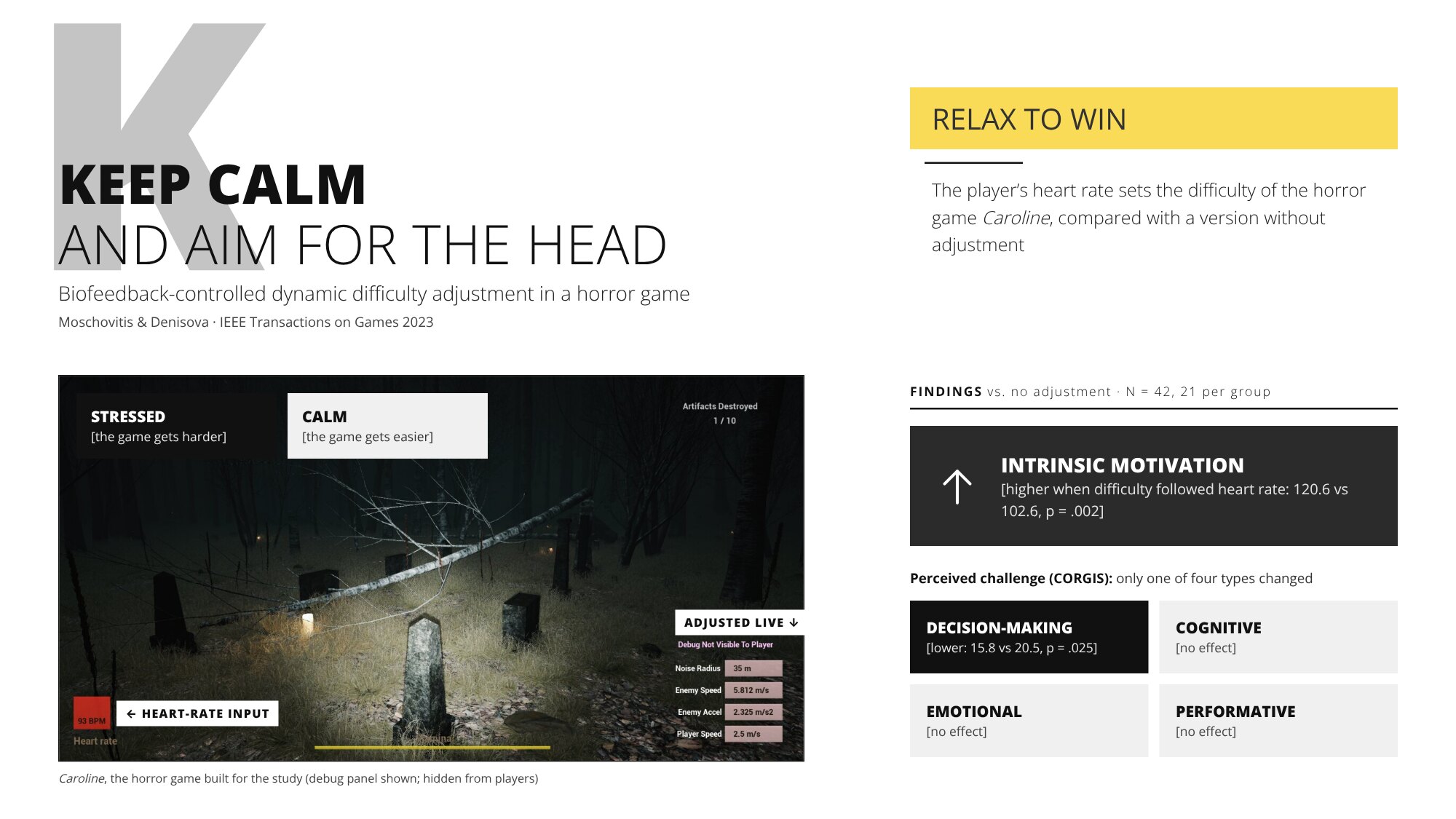
We built “Caroline”, a horror game that reads the player's heart rate and adjusts its difficulty in real time: stressed players get a harder game and relaxed players an easier one. We compared it with a version of the game without the adjustment.
In games
Related ideas in commercial games
-
Our example
Nevermind
A horror game that uses biofeedback to make the game harder when players get stressed.
-
Our example
Left 4 Dead
Its “AI Director” adjusts the pacing and number of enemies based on how players are doing.
The game
How the study worked
- Game
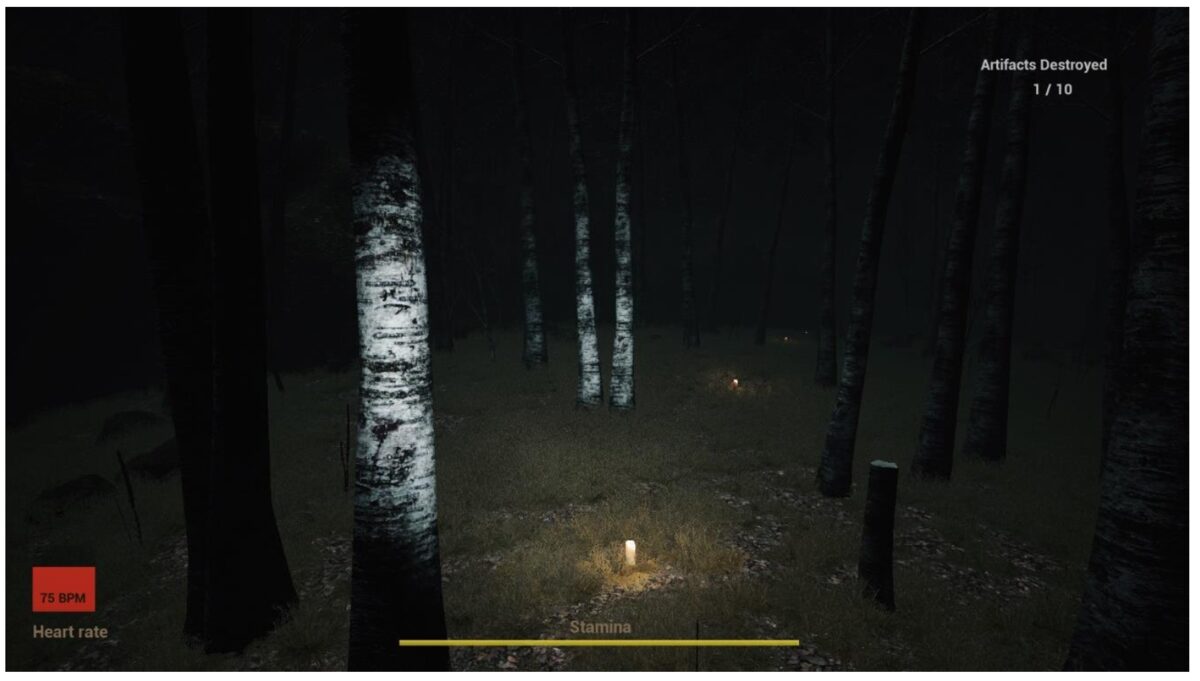
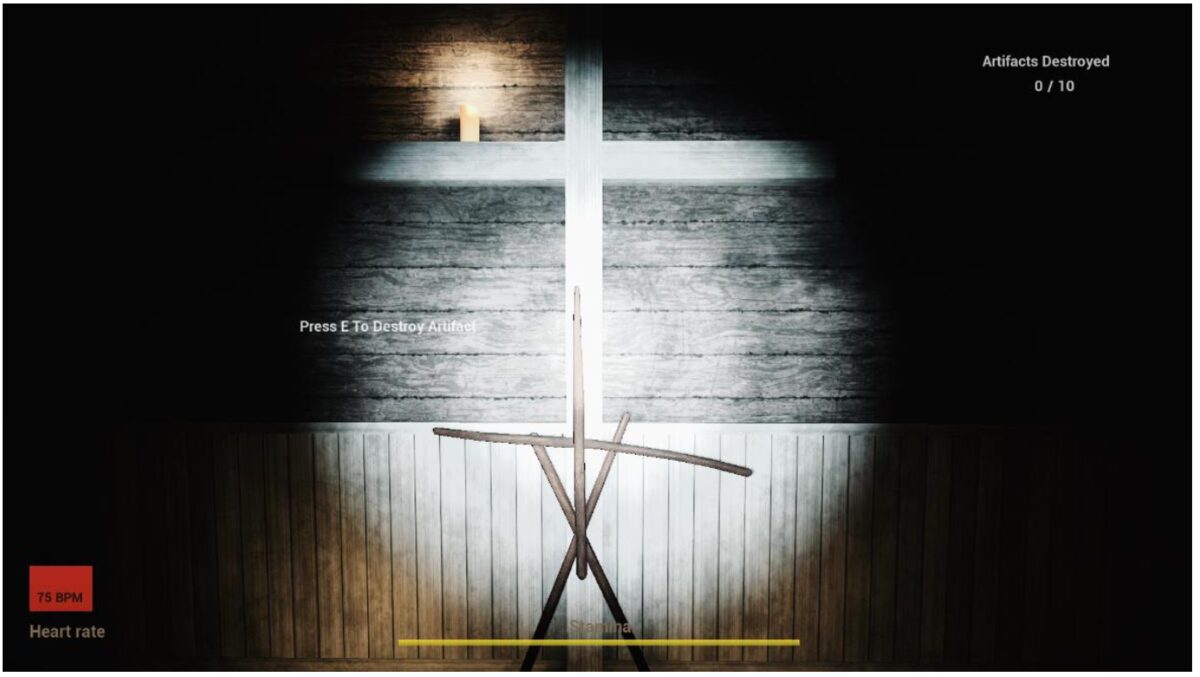
- “Caroline”, a horror game made for the study: the player collects ten artifacts while avoiding enemies that cannot be fended off or defeated
- Players
- 42 (21 played with biofeedback-controlled DDA, 21 without)
- What players were told
- Players with adaptive difficulty were instructed that their heart rate controls certain aspects of the game, making the game more challenging if the heart rate increases
- Play time
- Around 20 minutes on average, based on playtesting
- Measures
- Intrinsic motivation (IMI) and perceived challenge (CORGIS)
How the biofeedback loop works
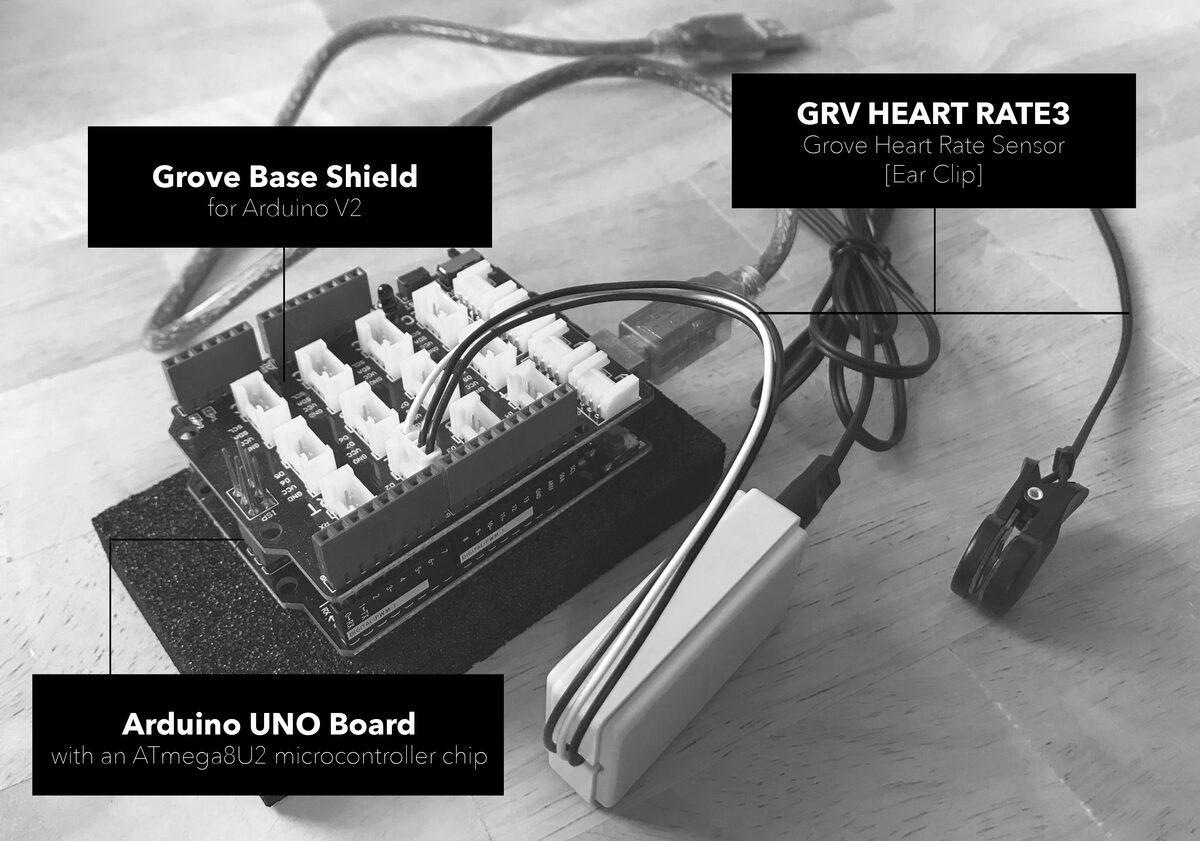
The game uses the player’s heart rate to adjust three parameters in total.
| Parameter | Formula | At 75 bpm | At 120 bpm |
|---|---|---|---|
| Caroline’s max speed | HeartRate × 2.5 | 187.5 units/s | 300 units/s |
| Caroline’s max acceleration | HeartRate × 2.5 | 187.5 units/s² | 300 units/s² |
| Player’s noise radius | HeartRate ÷ 60 × 2250 | 2812.5 units (10 m) | 4500 units (16 m) |
Values from the paper, in Unreal Engine units. The loop diagram is a schematic of the rule the paper describes: “if the player is too stressed, the difficulty increases, and the opposite happens if the player is relaxed.”
Key findings
- Players of the biofeedback version reported higher intrinsic motivation.
- Of the four types of challenge measured, only decision-making challenge was affected by the adjustment.
- Nominated for the IEEE Transactions on Games Outstanding Paper Award.
From the talk
My CoG 2025 talk on this paper
This encourages self-regulation and adds a mental layer to gameplay: not just ‘run and hide,’ but ‘breathe and survive.’
On the heart-rate mechanic
The reduced sense of decision-making burden suggests players may attribute some control to the system—almost like it’s co-playing with them.
On lower decision-making challenge with DDA
Read and cite
APA citation
Moschovitis, P., & Denisova, A. (2022). Keep Calm and Aim for the Head: Biofeedback-Controlled Dynamic Difficulty Adjustment in a Horror Game. IEEE Transactions on Games, 15(3), 368-377.
- Proactive or Reactive? Comparison of Dynamic Difficulty Adjustment Effects on Player Experience and Physical Effort in a Running Exergame PDF of Proactive or Reactive? Comparison of Dynamic Difficulty Adjustment Effects on Player Experience and Physical Effort in a Running Exergame
- Non-Euclidean Video Games: Exploring Player Perceptions and Experiences inside Impossible Spaces PDF of Non-Euclidean Video Games: Exploring Player Perceptions and Experiences inside Impossible SpacesPublisher's version of Non-Euclidean Video Games: Exploring Player Perceptions and Experiences inside Impossible Spaces
- Redefining Play: A Novel Framework for Differentiating Agency and Autonomy in Video Games PDF of Redefining Play: A Novel Framework for Differentiating Agency and Autonomy in Video GamesPublisher's version of Redefining Play: A Novel Framework for Differentiating Agency and Autonomy in Video Games