Player Experience and Deceptive Expectations of Difficulty Adaptation in Digital Games
JournalEntertainment Computing, 2019
In short
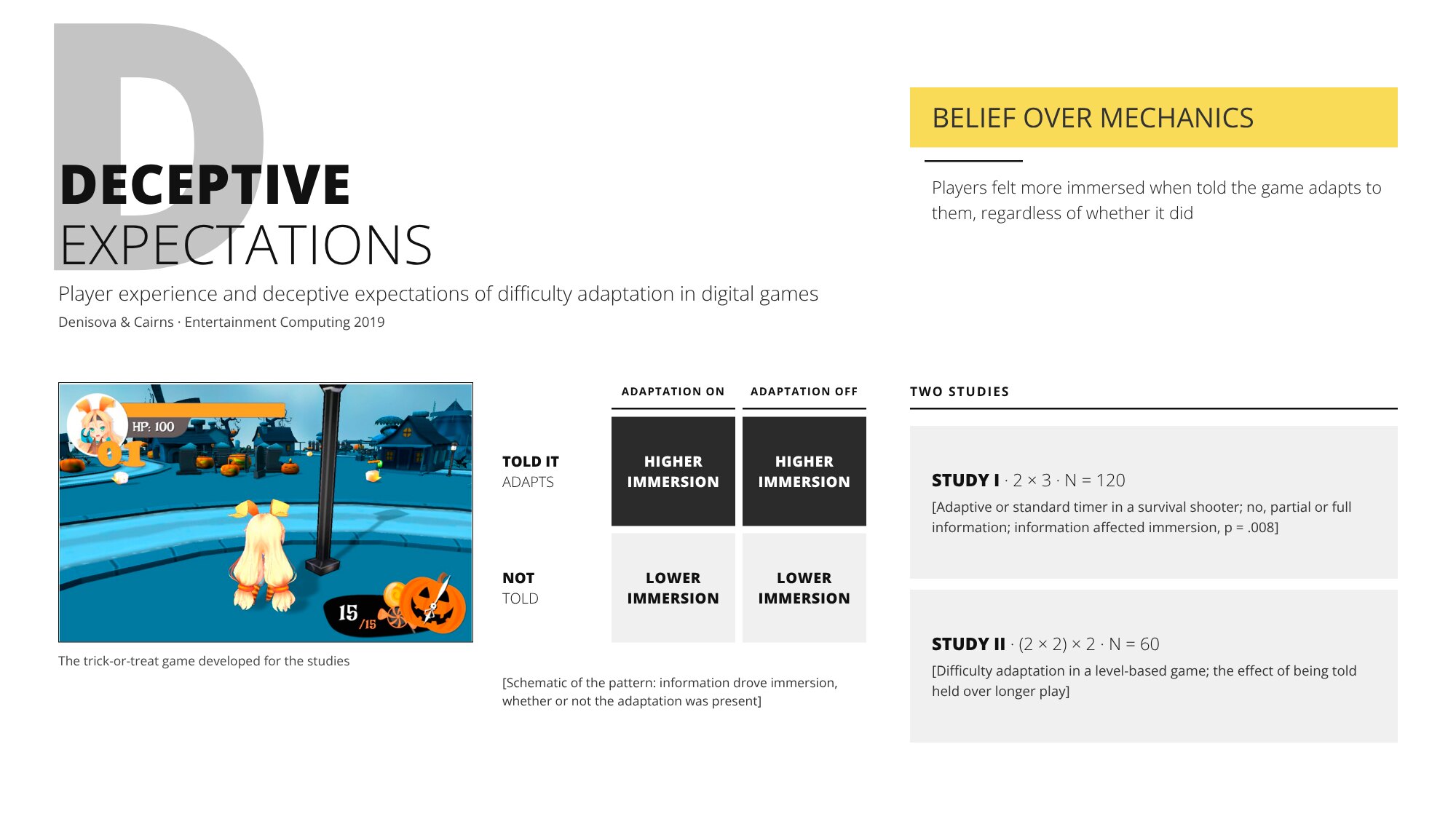
Does telling players that a game adapts to them change their experience, whether or not it really does? In two studies with two games using different performance-based adaptations, we varied both what players were told and whether adaptation was present.
In games
Adaptation players don't see
-
Our example
Resident Evil 4
Quietly adjusts its difficulty to how well you play, and most players never notice. What players believe a game is doing may matter as much as what it does.
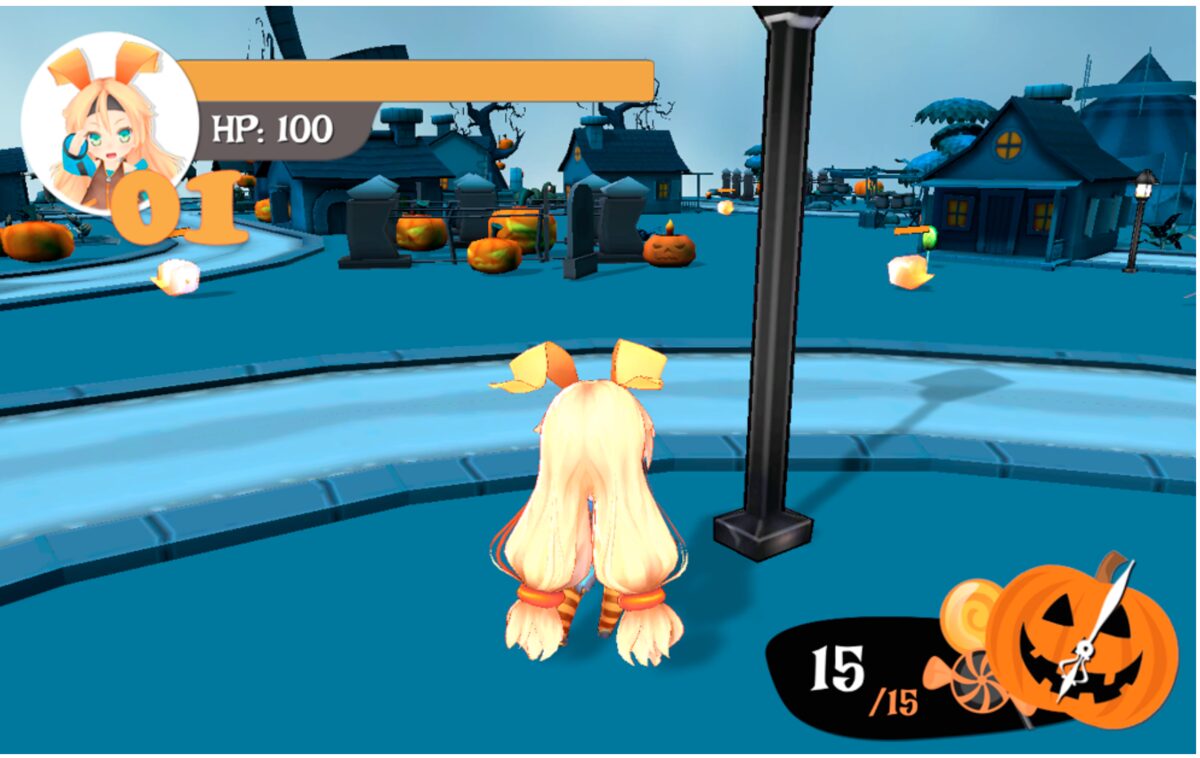
The game in Study II
How the studies worked
Study I
- Game
- Nightmares, modified to have an adaptive timer
- Players
- 120
- Design
- 2 × 3 between-subject: adaptive or standard timer × no, partial or full information
- What players were told
- Partial information: that the timer adjusted based on their performance, but not what exactly this adaptation did. Full information: how the adaptation changed their gameplay based on their performance.
- Adaptation
- The time sped up or slowed down based on the player’s performance at discrete points in the game
- Play time
- 1.5 minutes (or what appeared to be 1.5 minutes in the adaptive condition)
- Measures
- IEQ and game scores
Study II
- Game
- “Trick or Treat”, a Halloween-themed game developed for the study in Unity
- Players
- 60
- Design
- (2 × 2) × 2 mixed measures: some or no information about the concept of adaptation
- Adaptation
- The number of sweets collected on each level adapts the difficulty of the next level: enemies’ detection radius, the player’s health and attack strength
- Play time
- Two 10-minute sessions
- Measures
- IEQ after each session, plus levels completed, deaths per level and difficulty changes
Key findings
- Players felt more immersed when told the game adapts to them, even when it did not.
- The effect appeared in both games and remained strong over longer play sessions.
- Developers may not need to worry about telling players about adaptation, at least in some circumstances.
What this means for games user research
Even a casual reference to specific game factors could bias the results of playtesting and games user research.
Conclusions
It is important to keep the language used to describe the game as neutral as possible.
Conclusions
Read and cite
APA citation
Denisova, A., & Cairns, P. (2019). Player Experience and Deceptive Expectations of Difficulty Adaptation in Digital Games. Entertainment Computing, 29, 56-68.
Line of work
- Builds on · 2015Adaptation in Digital Games: The Effect of Challenge Adjustment on Player Performance and Experience
- Builds on · 2015The Placebo Effect in Digital Games: Phantom Perception of Adaptive Artificial Intelligence
- This paper · 2019Player Experience and Deceptive Expectations of Difficulty Adaptation in Digital Games
- Keep Calm and Aim for the Head: Biofeedback-Controlled Dynamic Difficulty Adjustment in a Horror Game PDF of Keep Calm and Aim for the Head: Biofeedback-Controlled Dynamic Difficulty Adjustment in a Horror GamePublisher's version of Keep Calm and Aim for the Head: Biofeedback-Controlled Dynamic Difficulty Adjustment in a Horror Game
- Power-Ups in Digital Games: The Rewarding Effect of Phantom Game Elements on Player Experience PDF of Power-Ups in Digital Games: The Rewarding Effect of Phantom Game Elements on Player ExperiencePublisher's version of Power-Ups in Digital Games: The Rewarding Effect of Phantom Game Elements on Player Experience
- Adaptive Technologies in Digital Games: The Influence of Perception of Adaptivity on Immersion